Distinguishing the Undistinguished

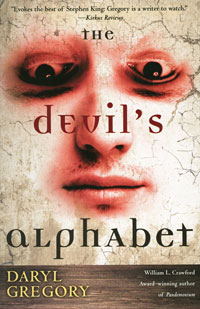
So this wonderful news arrived the other night: The Devil’s Alphabet is on the list of finalists for the Philip K Dick Award, the award for books published as paperback originals. The winner will be announced in Seattle at Norwescon on April 2, 2010.

When PKD died, Tom Disch founded the award in honor of the man.  As Locus puts it, “The awards were created and named for the writer who, though increasingly renowned after his death in 1982, was published mostly in undistinguished paperback editions during his career.”

Let’s hear it for undistinguished paperback editions!

I tried to trick my way onto the ballot last year by inserting PKD as a character in Pandemonium. Somebody told me that was the way to do it. Turns out, you have to write something that doesn’t mention Dick at all. (Insert mandatory Dick joke here.)

Seriously, I’m honored to be on the list, for a lot of reasons, but especially because several of PKDs books inspired me, and some of the previous winners and nominees include some of my favorite books. You can see all the covers of the books at SF Signal’s site. I swiped some of their html, because it includes the links to some of their reviews:

  • Bitter Angels, C. L. Anderson (Ballantine Books/Spectra)
  • The Prisoner, Carlos J. Cortes (Ballantine Books/Spectra)
  • The Repossession Mambo, Eric Garcia (Harper) [See SF Signal’s review]
  • The Devil’s Alphabet, Daryl Gregory (Del Rey) [See SF Signal’s review]
  • Cyberabad Days, Ian McDonald (Pyr) [See SF Signal’s review]
  • Centuries Ago and Very Fast, Rebecca Ore (Aqueduct Press)
  • Prophets, S. Andrew Swann (DAW Books) [See SF Signal’s review]

The Mug’s Game

Okay, so I finished a chapter of the new book yesterday, and Kath and Ian both read it.  (Kath’s the wife, Ian’s the son. Emma the daughter is too busy these days to read her dad’s stuff, though she wants to.)

The thing I appreciate about Kath as a reader is that she has zero tolerance for genre cliches, and she’s hyper attuned to interpersonal relationships. If I start shorthanding the relationships — basically, making the reader assume more than they should about how two characters feel about each other, or leaving blank what should be there, so that the action becomes impossible to interpret — she’ll call me on it.

Now, sometimes I ignore her. Sometimes I’m deliberately holding back on information on a character, or what one character thinks of another, to pay it off later. Sometimes I want the reader to lean in, to work for what the character is thinking. But, yeah, sometimes, I’ve just missed the boat.

As was the case in this chapter. There are two secondary characters who are inadequately fleshed out. One of them, I deliberately left mysterious. But the other, I thought I’d provided enough info so the reader could sense what their relationship was. I was wrong. Thank Jebus I’ve usually got time to rewrite, and I can fix this stuff before it goes out in the world.

Now Ian. Ian is thirteen, and he doesn’t give a rat’s ass about interpersonal relationships. He’s after the bang, and the comedy, and the action, and if I don’t deliver that, he will be ON me. In this chapter, he was happy to get some of the bang and comedy. (The bang is the thrill of the new. The comedy is self-explanatory. And action is plot, taking arms against a sea of troubles, etc.) Not much action in this chapter. This was one of those sections where I needed to load the bases hit by hit, so that expectation was built to a fever pitch…

But it’s a balancing act. I want, crazily enough, to satisfy everyone, everywhere, all the time. I don’t like to admit this. Writers aren’t supposed to care about their readers that much. And really, there is no way to please everyone all the time. It’s a mug’s game to try. But I’m a mug.

So, instead of writing the next chapter, in the next few days I’ll be going back over the last chapter, seeing if there’s a way to satisfy both those readers: a bang that means something.

I’ll let you know if I figure out how to do that.

Meeson’s Greetings

Oh, it’s almost Christmas, but for a needy writer, it’s always the Season of Me, and blog posts turn naturally to blatant self-promotion.

Signing at the State College Barnes and Noble — January 22, 2010 at 6:30pm.

If you’re in Happy Valley, stop by the local B&N (you know, the one out there by the mall). I’ll read a little from the book, answer your questions (or make you answer mine), and sign copies. Afterward, stop by my house for coffee and dessert! Directions at the reading.

Reading at KGB, February 17

And when it’s even colder out, I’ll be in New York City reading  with none other than Peter Straub at the KGB Fantastic Fiction Reading Series. Time to man-up!

Free Stories

My story “The Illustrated Biography of Lord Grimm,” which appeared in Year’s Best Fantasy 9, is available for free at the moment from Tor.com, along with four other stories: “The Film-makers of Mars” by Geoff Ryman, “Caverns of Mystery” by Kage Baker, and “Lady Witherspoon’s Solution” from my State College, PA compatriot, James Morrow. And you can download three more stories from that anthology, too.

You do have to create a tor.com account first. I ran into a hiccup where the site lost track of my request after I created my account, so I suggest creating the account first, then clicking the link.

Fictional FrontiersOn the frontiers of radio

Sohaib from Fictional Frontiers had me on his radio show a couple weeks ago, and I had a great time yet again — he was an enthusiastic supporter of Pandemonium. You can listen to or download the interview on their archive site.

A couple more reviews

These hit my in-box this week, courtesty of google’s ego surf tools:

From Sean Melican at Book Page: “More subtle than some SF novels, The Devil’s Alphabet is an absolutely stunning, intoxicating blend of vintage mystery, science fiction and intergenerational saga which artfully questions the meaning of what it is to be ‘human.’”

From Amy Gwiazdowski at BookReporter.com: “Daryl Gregory has an engaging writing style, and while I didn’t care much for Pax [the main character], he infused the book with enough interesting turns to keep me reading. I found myself wanting to know more about the residents, what happened to them, and why they changed.”

So that’s it for me, for now. How are you doing? Oh wait, hold that thought, I see someone on the sidewalk who may not know about me. Gotta go!

Does Cross Posting Mean I’m Angry?

And is a cross-dresser upset about their wardrobe?

Just some notes about things going on in the world of Clockwork Storybook. Awhile back I mentioned that I joined this august collective of multimedia writers (I think I’m the only monomedia guy there), and we use the blog to talk about what is known among the pretentious as “matters of craft” — AKA, the writing biz. I just wrote a post called Iron-Clad Scrooge about the bullet-proof narrative structure of “A Christmas Carol. ” Really, there’s seems to be no damage you can wreak on this story that will derail it.

But more fun than my post is what my Clockwork cohort Paul Cornell has put together. On his blog, he’s hosting “The Twelve Blogs of Christmas,” and Day 8 is a  cheesy 1960’s Christmas special co-written by all the Clockwork folks. Enjoy.

Good reviews aren’t necessarily positive

Update 12/14/09: Gary K. Wolfe’s review is now online.

Today I read two reviews of The Devil’s Alphabet, one by Karen Burnham at SF Signal, and the other by Gary K. Wolfe at Locus (printed on actual paper). Both were pretty positive — Wolfe starts the review calling me “amongst the most interesting of the newer writers to emerge in the past decade, and rapidly becoming one of the most unpredictable,” which is nice, and Burnham gives me 4/5 stars — so I’m not complaining. But what I most appreciated was the thoughtfulness of the reviews.

Gary Wolfe is pretty much the dean of SF critics, the reviewer I’ve been reading the longest, and the person I most wanted to be reviewed by when I started writing novels. When I get my copy of  Locus, I read his column first, every issue. He’s such a good writer that I find it difficult to disagree with him, even when I don’t agree with him. So it was with some sense of trepidation that I read his review — if he said I sucked, what was I supposed to do with that massive cognitive dissonance?

Karen Burnham has been reviewing for a couple years, and when I met her at a convention a couple years ago, I was immediately struck by her excellent taste — because she immediately told me she liked my short stories. She hasn’t been reviewing enough lately — she’s works for frickin’ NASA, for crying out loud, so her day job’s a bit busy — but her review of Pandemonium last year pointed out something I hadn’t been conscious of, that you could read the story as one family’s struggle to take care of someone with mental illness. It’s the mark of a good review that afterward you think, damn, maybe that IS what I meant.

So, two reviews in one day. Wolfe (I’m going to call him Wolfe, because in his review he uses my last name, like reviewers do) pointed out that while Pandemonium was a mash-up of content, Devil’s Alphabet was a mashup “of form and genre.” Then he goes down the line sighting echos and references that seemed to have informed the book, all of which made me think, damn, he must be right.

On the one hand, the novel hovers around a sort of evolutionary hard SF of novels like Greg Bear’s Darwin’s Radio… on the other, it returns to an earlier kind of evolutionary SF that we’d seen in novels from van Vogt’s Slan to Sturgeon’s More Than Human, in which the focus is more on the pariah status of the victims than on the biological puzzle, and on the inability of the larger society to cope meaningfully with the implications of the event. But then again, it’s also a homecoming tale about a young man (unaffected by “the Changes”) who has escaped his rural origins for a life in Chicago. Finally–and this is what drives the novel’s main plot–it’s a small-town southern Gothic murder mystery. No one can accuse Gregory of being a one-note author.

Wolfe then goes on to describe the overstuffed plot, and says, “While Gregory does an impressive job of keeping all these plates spinning without losing his narrative’s coherence, there is still a sense that a bit much is going on all at once, and that some of those plates are starting to wobble.”

This is definitely something I struggled with while writing the novel. How to pay off all those plot lines? How to keep them in balance? I think it’s something I’ll continue to struggle with. I was happy, though, to have him end the review with this:

The larger question, of what eventually might become of these evolutionary exiles as they move into second and third generations, seems to move us back into Theodore Sturgeon territory, and it’s fortunately a territory that Gregory has mastered well. The novel’s quiet ending, in a snowbound South Dakota winter, is haunting.

In Burnham’s (not Karen’s) review, which I won’t quote from as much, ’cause you can read it yourself, she points out something that is kind of my modus operandi — I try to wed a mainstream, character-driven story to sfnal weirdness. In fact, it’s pretty much all I’m trying to do, every outing.

But Burnham takes a couple paragraphs to do something that the best critics do — consider the work in context of a career. One, she doesn’t think Pandemonium or Devil’s Alphabet measure up to my short stories, and she’s particularly sad that neither book has a female character as the main protagonist, as some of my stories (her favorites of mine) do.

This is an interesting problem for me, in a couple ways: one, I don’t want to be writing the same characters over and over, and having the main protagonist always be young, white, and male is boring and a bit odd. (Besides, I want to stay as unpredictable as Wolfe thinks I am.)

And it’s not like I don’t like to write about women. Burnham mentioned some of the short stories, and in  the novels some of the strongest and smartest characters are female. In Devil’s Alphabet, as a reviewer on SFF World pointed out last week, most of the power structure of Switchcreek is female, led by Aunt Rhonda, the mayor of the town, who shares some of the POV duties in the book. But none of these women are the main character, as Burnham points out. So what’s up with that?

Now, I realize that this is a sample size of 2 novels, and hopefully I’ll have more opportunities to write more books. But the problem for me is that I don’t have much choice in these matters. When I wrote “Second Person, Present Tense,” the main character walked on stage, and she was a teenage girl. There was never any question that she’d be a boy. In “The Continuing Adventures of Rocket Boy,” I likewise knew that this was the story of two boys who were best friends. In “The Illustrated Biography of Lord Grimm,” the welder and minion of the supervillain was always going to be a woman– and so on, for every story.

With secondary characters, I have a bit more leeway. They’re more vaguely defined in my subconscious, so when they walk on stage I can ask myself if they’d be more interesting, and better for the story, as female or male, gay or straight, of color or not. But with main characters, they pretty much arrive as-is, with no refunds, packed alongside the idea that carried them into my brain. Maybe it’s different for other writers.

So, will I ever have a female protagonist in a novel? I can’t believe I won’t at some point. If the short stories are any indication, some woman’s going to walk on stage with a novel-sized idea under her arm and demand to have her story told. I have to admit, though, that in the book I’m writing now, the main character is another guy. Maybe Book 4, then.

Small Beer, Small Baby, Good Books, Great Charity

Here’s something for the season: Gavin Grant and Kelly Link, owners of Baby Ursula! Small Beer Press, are holding a book sale to benefit The Franciscan Children’s Hospital, where their daughter Ursula (that’s her at left) stayed this year during the first months of her life. (Full story)

Pay full price and a big portion goes to the hospital — or pay the sale price and $1 is donated. Everybody wins.

Small Beer publishes wonderful books, including two I recently read: The Ant King and Other Stories by Benjamin Rosenbaum (surreal and unbelievably fun), and Generation Loss by Elizabeth Hand (frightening and beautifully written). As Gavin and Kelly say, Go wild!

The Devil’s Alphabet: Launch Day

The freaky-deaky cover
Click it to flip it

It’s November 24 — the official publication date of my second book, The Devil’s Alphabet. I’ve gotten word from pal Jack Skillingstead that it’s already on the shelves in Seattle—it must be the time difference. And two people just emailed me (it’s 1Am Tuesday morning as I type this) that their order just shipped from Amazon.

The latest reviews, the first chapter, and links to buy are all on the Devil page.

Meanwhile, here’s a party game to play for the launch: go to your friendly neighborhood bookstore, find the book on the shelf… and flip it over. It’s freaky fun for the whole family.

There are a raft of people who were a great help in writing this book. I’d tell you to read about them in the acknowledgments, but what if you never buy the thing? Or if the cover scares you, and you never even look inside?

Better to thank all those people here, in front of God and everybody. Here’s a copy of what you’d find if you opened the front cover:

Many people helped make the book you’re holding (or viewing, or listening to) and I owe them my sincere thanks. Chris Schluep, with a deft hand on the editorial stick, guided this book the final miles over the chilly Hudson. Many more people at Del Rey worked to get these words in front of you, including some–Fleetwood Robbins (who acquired this book when its title was “Work to be Named Later”), and SueMoe! (one word, with exclamation mark)–who’ve moved on and are greatly missed. Deanna Hoak signed up for a second tour of copy editing. And David Bowie–well, he has no idea how much he helped me write this thing.

My gratitude goes as well to the early readers: Charles Coleman Finlay, Sarah K. Castle, Cathrynne M. Valente, and the rest of the Blue Heaven workshop crew who critiqued the first draft; Heather Lindsley, who fine-tuned the second; and Kathy Bieschke, Gary Delafield, and Elizabeth Delafield, who marked up hundreds of pages in between. Emma and Ian Gregory read none of it, but informed all of it.

And to all the Gregorys, Barbaras, Meyers, Riddles, and Heatons, the multitude of aunts, uncles, and cousins — so many cousins! — scattered over the Smokies: thanks for feeding your Yankee relation every time he came to town. Even more than the bizarre residents of Switchcreek, the lonely boy in this book is a creature of pure imagination.

Last, I want to point out that the book is dedicated to my parents, Darrell and Thelma. You wouldn’t believe what they had to put up with.

I’ve been Yeti-Stomped

My interview with Patrick Wolohan of the Stomping on Yeti blog just went live. Patrick’s been running an interesting interview series called “Keeping an eye on….” Here’s how he explains it:

In June 2008, there was a SF Signal Mind Meld entitled Who Are Tomorrow’s Big Genre Stars. Basically, a group of genre superstars involved in editing, publishing, and writing weighed in on who they thought were going to be next genre heavy hitters in the years to come.

They were 21 names on the list, and Patrick’s been trying to follow up with each of them to hear what they’re working on now and to ask a few off-the-wall questions.

In this one we talk about the ghettoization of genre, the highlight of my career so far (emotionally speaking, I peaked early) and my favorite word. Patrick will also be publishing his review of The Devil’s Alphabet this week.

Oh, here’s the list of the other folks on that SF Signal list that he’s been keeping an eye on:

  • Paolo Bacigalupi
  • Jay Lake
  • David Moles
  • Benjamin Rosenbaum
  • Cory Doctorow
  • Ted Kosmatka
  • Chris Roberson
  • Vandana Singh
  • Daniel Abraham
  • Laird Barron
  • Elizabeth Bear
  • Alan DeNiro
  • Alex Irvine
  • Paul Melko
  • Naomi Novik
  • Tim Pratt
  • M. Rickert
  • Jason Stoddard

This is not the swine flu!

Okay, I love World Fantasy, but I came back with a head cold, which today blossomed into fever, body aches, and massive sinusoidal activity. I went home from work and crashed hard. As I type this I’m riding a wave of ibuprofen and sudafed. Also, the ringing in my ears sounds like Jethro Tull. I’m hoping it will pass soon.

It was a great convention, though. I made new friends and kept the old, one is silver, the other is… hey aqualung…. Okay, I’m back.  While in San Jose I got to hang out with Team Pandemonium: my first editor, Fleetwood Robbins, my second editor, Chris Schluep, and my copyeditor, Deanna Hoak. Only cover artist Greg Ruth was absent (but I was on a panel where the moderator asked me to talk about the cover).

Speaking of covers, Chris brought along the first printed copy I’d seen of The Devil’s Alphabet. A very nice moment, getting to hold that first warm copy.

I also learned this weekend that Publisher’s Weekly named it one of the top 100 books of 2009 — one of only five in the science fiction/fantasy/horror category. They said:

This subtle, eerie present-day horror novel mercilessly dissects and reassembles the classic narrative of a man returning to his smalltown birthplace, where the familiar folks have become strange creatures.

So dissection and reassemblage — that’s pretty cool. And to be in such good company: China Mieville’s The City and the City (also edited by my man Chris Schluep),  The Windup Girl by Paolo Bacigalupi (he’s a friend o’mine), Cherie Priest’s Boneshaker, and Ellen Datlow’s anthology Lovecraft Unbound (which my Lovecraft-obsessed son will undoubtedly get). Buy them all for Christmas.

Finally, on Sunday afternoon Pandemonium lost the best novel award to Jeff Ford and Margo Lanagan, two stellar writers. I’m getting used to losing to Jeff, and if he wasn’t so good, and a nice guy to boot, it might start to bother me.  But as my daughter pointed out, Neil Gaiman also lost. So that makes Neil and me, like, equals, right? (Right….)

Okay, off to take more pills and lie down. Just as soon as this flute solo dies down.

Fantasy World

Tomorrow morning I’m off to my favorite con, the World Fantasy Convention, being held this year in San Jose, California. (Yes, you can start humming the song now. ) Pandemonium is up for Best Novel, and my goal, when I lose, is to smile manfully in such a way that people buy me consolation drinks. I have to make this pay somehow.

I’ll be appearing at the panel “Contemporary Rural Fantasy” at Sunday  10:00 AM. Everybody’s heard of urban fantasy — these days, that mostly means chicks in leather pants killing vampires — but this panel asks if there is such a thing as rural fantasy. I doubt the panel will answer that question — con panels don’t have a reputation for resolving much of anything — but we can always hope for controversy, right? I shall make the case for Suburban Fantasy being the most important genre of our field, and then storm out in anger.

World Fantasy is my favorite because it’s small (capped by its bylaws, a wonderful thing), it’s professional (mostly writers and editors and agents, with no costumes allowed), and the number of great people this con attracts  is pretty stunning. I’ll be seeing my editor there, hanging out with people I admire, and trying not to say anything -too- stupid.

But what I’m most looking forward to is reconnecting with some good friends, and finally meeting in person some people who I’ve only talked to through teh internets. And if this is like any previous year at WFC, I’ll be meeting one or two strangers who will turn out to be lifelong friends.

Gotta pack!