The Next Big Meme, er THING: Afterparty

So there’s a meme goin’ round, with writers talking about their upcoming books, and tagging other writers, and all of us answer the same  questions. My pal Ian Tregellis (whose got TWO books coming out in 2013, one that completes his very cool Milkweed Trilogy about super-soldier psionics versus warlocks in World War II and beyond) tagged me last week.

If you want to follow the bouncing Meme, next week my pal Jack Skillingstead will be talking about his fabulous new SF novel Life on the Preservation, coming out in 2013.

Now here’s the thing: some of the questions in this meme are a bit off, and they come in the wrong order. So I’ve rearranged to suit. (Me. To suit me.) Also, this is the first time I’ve talked about this book online. So, I’m basically offering this scoop to myself.

Here we go!

1: What is the working title of your next book?

The working title is Afterparty. My own private subtitle for it, the name I call it when I’m singing it to sleep, is The Atheist’s Prayerbook.

5: What is the one-sentence synopsis of your book?

Before Don LaFontaine died, I had him record a voiceover for the book. His estate won’t let me post the audio, but the text of it is: “In a world where God is a drug, one woman has to get sober.”

2: Where did the idea come from for the book?

See, I’m going to pretend that this was a two part question starting with “What’s the book about?”

Afterparty is about a drug called Numinous that opens up a portal to God–or at least a convincing illusion of one. The protagonist is Lyda Rose, a neuroscientist who helped create the drug. Ten years ago someone overdosed her and four other coworkers (including her wife, who died), and ever since Lyda has been haunted by a permanent angel–Dr. Gloria. Lyda tries to remind herself that the doctor is just a manifestation of her temporal lobe, but the angel is awfully hard to argue with.

The book is also about neuro-atypcial people in general, and all the ways that our brains are fooling us, often for our own benefit. I’m happy to report that the book includes the only combination  sex scene / debate over free will in any science fiction book.

The ideas came from the short stories I’ve been writing over the past decade. Many of them were concerned with the so-called hard questions of neuroscience: What is consciousness? How do we construct a self? And do we have free will or is it all a massive prank pulled on us by our own neurons? Some of these questions have crept into the fringes of my novels, but I wanted to write a book that took on these ideas head on.

3: What genre does your book fall under?

Afterparty falls in the genre that my editor, David Hartwell calls “Neuro SF” — hard science fiction about neuroscience. You could further sub-categorize it by calling it near future neuro SF. I found that I didn’t need to set the book very far from today, because current research about what’s going on in our brains is mindblowing enough.

It’s also a drug novel, and  a crime novel. I’m a lifelong reader of Elmore Leonard and Philip K Dick, and it’s clear now that their books have been having sex in my head and hatching strange babies.

4:  What actors would you choose to play the part of your characters in a movie rendition?

I have a stipulation in my contract that any adaption must take the form of claymation.

6: Will your book be self-published or represented by an agency?

See, that’s a weird question. The “or” part I mean. Because it’s not self-published, but I am represented by the amazing Martha Millard. The book will be coming out from TOR, and edited by the also amazing David Hartwell.

7: How long did it take you to write the first draft of the manuscript?

I wrote the first three chapters five or six times over the course of a year in which I was mostly working on other things. The direction of the book changed radically with each draft. Once I finally settled on a line of attack, it took about seven months to write, counting rewrites. Actually, I’m writing the last chapter this week, and I’ll be rewriting as soon as my writer friends explain to me what’s wrong with it.

8: What other books would you compare this story to within your genre?

I don’t know any other near future neuro SF books. Can someone help me out? But if we compare to books set further into the future on this topic, then I’d be pleased if they put this story in the same genre as Peter Watts’ Blindsight or Greg Egan’s books about consciousness.

9: Who or what inspired you to write this book?

I was inspired by the neuroscientists who took the time to write books for lay people, so that I could rip them off and write SF stories about their research: V.S. Ramachandran, Antonio Damasio, Daniel Wegner, and the dean of neuro porn, the man wrote the first book that got me interested in the strangeness of the human mind: Oliver Sacks. These people write brilliant books that are non-fiction but read like science fiction.

10: What else about the book might pique the reader’s interest?

Did I mention the free will debate / sex scene? Okay, how about people like these?

  • A voluntary sociopath
  • A man who carries his mind in a plastic aquarium treasure chest
  • Native America Cigarette smugglers
  • Frat boys throwing drug-induced “Gay for a Day” parties

Get Ripped Off!

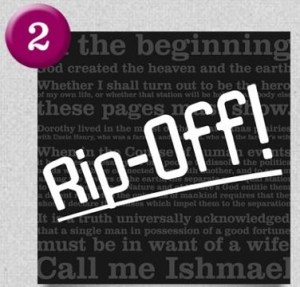
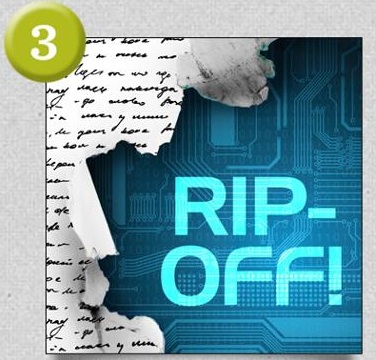
So a new story of mine is in this audio anthology called RIP-OFF! by Audible.com, edited by Gardner Dozois, and coming out Dec. 18 2012, just in time for Groundhog’s Day. And you, my friend, can pick the cover. Below are the three choices, but you can vote on Facebook here.  And if you’re in the mood, you can pre-order.

Every story is a brand-new science fiction or fantasy tale that begins with a famous first line. Allen Steele starts his hardboiled detective story with “Call me Ishmael.”  Nancy Kress dares to take on one of the most maligned first lines of all:  “It was a dark and stormy night.”

My story “Begone” starts with the first line from one of my favorite novels, Dickens’ David Copperfield:  “Whether I shall turn out to be the hero of my own life, or whether that station will be held by anybody else, these pages must show.” The story goes on to consider the plight of a man who’s been replaced in his own life by someone taller and more handsome. Anyone who grew up on 60’s sitcoms will recognize the poor bastard.

So vote!


Rip-Off! Cover 1

Rip-Off! Cover 2


Rip-Off! Cover 3

Geffen Awards

I got an email tonight from Rani Graff of Graff Publishing, my publisher in Israel, reminding me that this is the week of the Geffen Awards– and the Hebrew version of my first novel, Pandemonium, is up for Best Translated Book. It should also be up for Best Cover Ever, but evidently they don’t have a category for that.

Other nominees are: Julian Comstock by Robert Charles Wilson, Accelerando by Charles Stross, The Knife of Never Letting Go by Patrick Ness, and Catching Fire (Hunger Games, Part 2) by  some nobody named Suzanne Collins. Hah! I kid! Please, Suzanne, do not have me killed in an open field by photogenic teenagers.

The Geffen Awards are presented by the Israeli Society for Science Fiction and Fantasy, and are not named after media titan David Geffen. (You can read about the Amos Geffen and the award on this English version of their web page — which only goes up to 2008. If you can read Hebrew, go here.)

I’m so grateful to Rani Graff for bringing the book to Israel, and to Didi Chanoch for doing the translation. Didi’s a hugely energetic guy that I got to meet in person last year at World Fantasy. (Didi, I’m sorry that the first time we talked I was having trouble speaking English. But you, sir, were eloquent in two languages.)

Rani and Didi, I’m pulling for you!

UPDATE 10/4/12: Alas, it’s photogenic, homicidal teenagers for the win. Pandemonium lost to Suzanne Collins’ Catching Fire. Not even my mother is surprised by that.

Reading at the Tuesday Funk

I’ve been away. Mostly writing, writing hard, like a veritable pony express rider — nay, Pony Express Writer. Bringing the words ‘cross the plains, people.  Soon — after contracts have been signed, etc. — I’ll be able to explain what I’ve been working on.

But meanwhile, can I talk about my website redesign? I hired my son to move all the content from my old website to this blog. Which brings us to the first rule of Website Redesign:

First Rule of Website Redesign

Nobody cares about your website redesign.

Related Rule

Nobody cares about your new smart phone.

Meanwhile, can I tell you what a wonderful time I had in Chicago recently? The World Science Fiction Convention was there, in my home town*, and I got to see so many good friends and meet new people. But the best part was doing a reading at The Tuesday Funk, a monthly reading series run by Sara Ross Witt and good friend Bill Shunn. Bill composes a poem for each Funk, which on the night I participated was this EPICALLY PROFANE EPIC POEM “Grand Motherfucker”. Please listen.

I also got to share the stage with pals Adam Rakunas (who read this excerpt from “The Right People” one of my all-time favorite stories), and Rae Carson (who read this excerpt from an upcoming book which I know will sell gazillions of copies — she’s great).

And here’s what I read, a short story called “Persistence.”

Good Good Reviews

Last month over at the SF Signal Mind Meld, the question was, What makes a good genre review? I held forth on my three wishes for better reviews: I want more context (telling me what the book is saying in relation to other books and the culture), I want some discussion of the prose itself (with excerpts, please), and (especially) I want reviews that are well written. Is that too much to ask?

I guess not. The universe answered in the best possible (and most ego-pleasing) way:  with James Sallis’ review of Raising Stony Mayhall, in the May/June issue of The Magazine of Fantasy and Science Fiction. The review is extremely positive (that’s the ego-pleasing part), but it also fulfills my three wishes.

First he talks about the book in terms of where it fits in terms the genre, and how he deals with students who come across a genre book and say they “don’t usually read this sort of thing”:

Nor will many claims bring a more impassioned response from me than “Well, this isn’t really science fiction (or a mystery, or a western), is it? This transcends (or deconstructs, or suberts) the genre.”

Draw them guns, partner, you better be ready to open fire.

He goes on to talk about why he doesn’t read much zombie fiction, because zombies are “Your basic one trick, or half a trick, pony.”

Well, not if the zombies have the good fortune of being in Daryl Gregory’s blazingly intelligent novel that doesn’t subvert or transcend or deconstruct one damn thing but instead, as all great writing does, honors and fulfills its heritage.

Wish #1: Check.

Sallis goes on to quote the opening page of the novel, and after that, a few more sentences as well, talking about what he likes about the prose. Wish #2: Done and done. But even more pleasingly (but not surprisingly– Sallis is an excellent writer, probably more famous now for having written the novel behind the also excellent movie Drive)  the way he writes about the book makes me want to read my own novel. That’s Wish #3 to retire the side. I’m a lucky man.

Other review news:

In Episode 10 of the SF Squee Cast, Seanan McGuire delivered a blush-inducing review of Unpossible and Other Stories. I only learned later that I’d met Seanan at Bill Willingham’s party at the San Diego Comic Con… and ignored her.  Even though she tried to talk about my book Devil’s Alphabet. WHAT?! First of all, I feel terrible. Second, I can’t believe I passed up a chance to talk about my own book with someone who wanted to hash through the weird genetics in that novel.

Last, I came across a lovely review of Raising Stony Mayhall on Geek Speak Magazine. In their “Recommended” status they rated it “Hell yes!” But here’s my favorite paragraph, which comes at the end:

Geek Speak’s Brad Crammond had the nerve – the nerve, I say! – to skim through this and call it “Jodi Picoult with zombies”, and while I take exception to his dismissive tone, I don’t entirely disagree. This novel doeshave some elements of the tear-jerking saga about it, and I won’t deny there were tears for me in here: many. But every single one of them was worth it, and the novel’s thought-provoking ending has stayed with me in all the months since first I read it, and often comes to me at quiet moments, when I am contemplating the vast complexities of life, the universe and everything. Indeed, if the job of speculative fiction is to make us think, then all I can say is this book is due for a stellar performance review and a hefty Christmas bonus, because think I did… and still am.

Carlos Magno is Lord of the Apes!

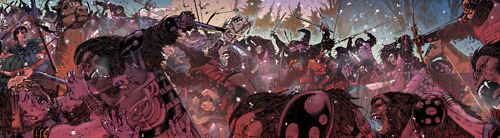
Planet of the Apes #10 is out in stores this week, and Carlos Magno, the genius behind the artwork, just KILLS IT in this issue. There’s a huge battle, and Carlos crams the pages with awesomeness.  Dafna Pleban, our editor on the book, just posted one of the panels, which spans two pages.  She then got everyone in the BOOM! office to try to count how many apes, humans, and horses Carlos had fit into that one panel — but only Carlos knows the truth.

Click on the pic to see their analysis:

And for the record? The description for panel 3 is TWO SENTENCES.

I love being a writer. And thank God for Carlos.

E-Possible: Unpossible now on Kindle

Hey folks, just a quick note to say happy holidays, and to tell you that thanks to the work of Patrick Swenson, publisher of Fairwood Press,  Unpossible and Other Stories is now on Kindle: http://tinyurl.com/unpossible-amazon  It will be out on Nook soon as well.

UPDATE 12/30: The Nook version is now available on Barnes & Noble: http://tinyurl.com/unpossible-bn.

And did I mention that they’re both only $5.99?

Now I’m going to go back to eating, drinking, and playing World of Tanks.

Criminally Overlooked Books of 2011: Unpossible is Guilty

So Deb Coates (a pal and fantastic writer who has her first novel coming out next year), was browsing Huffington Post, and came across this article, reposted from Flavorwire: “The Most Criminally Overlooked Books of 2011.” And hey, Unpossible and Other Stories is on the list! I’m flattered, but now I feel weird, because I think this makes Raising Stony Mayhall twice as overlooked. Maybe there’s another list out there. Books So Overlooked It’s Not Even Criminal, It’s Just Sad.

On the other hand, the books in that list sound very cool. More reading to do this winter break…

Audible Stony: Best Zombie Book of the Year

Audible.com released their Best of 2011 List, and Raising Stony Mayhall is their Best Zombie Book of the year.  (Audible didn’t make a category for horror, but they did for zombies — which just goes to show you, those living dead guys will take over everything.) My thanks to everyone who downloaded and rated the book!

If you’re the type to read books through your ears, you can buy the book here. The narrator, a voice actor named David Marantz, does a fantastic job.